
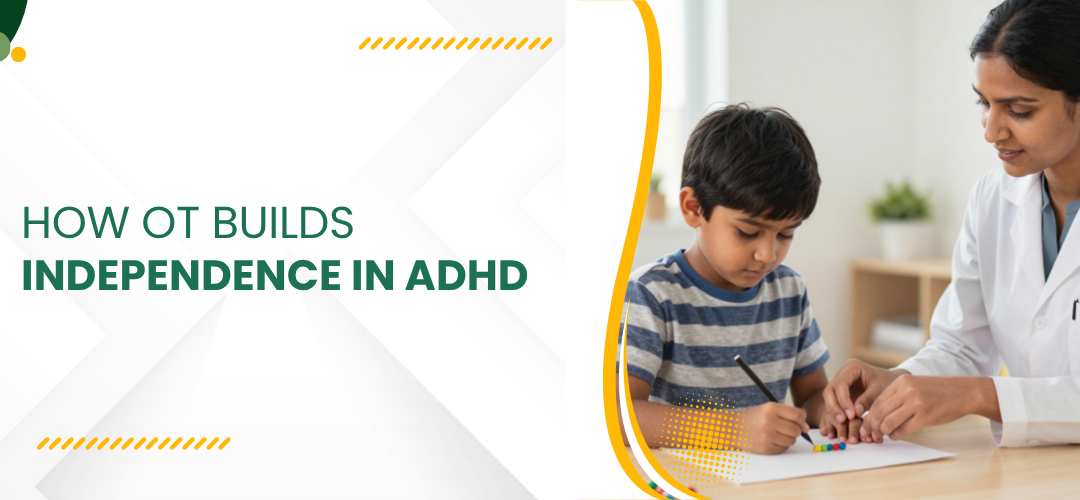
ADHD makes everyday tasks harder than they look. Getting dressed, packing a bag, sitting through homework. The child isn’t lazy. The brain just struggles to plan steps and stay with them. Occupational therapy breaks those tasks down, builds the focus and motor skills underneath, and trains the child to run the routine alone. Less reminding from parents. More doing it themselves.
According to Dr. Purva Pande, a leading specialist in Occupational Therapy in Gurugram, “ADHD isn’t a focus problem alone. It’s a planning and regulation problem. OT trains both, which is why the child starts finishing tasks without someone standing over them.”
Is your child capable but always needing reminders to finish anything?
What independence skills does OT actually build?
OT works on the skills sitting underneath everyday tasks, like focus, planning, and hand control.
Task sequencing: A simple thing like brushing teeth has six steps. OT teaches the child to hold that order in mind and run it start to finish without prompts.
Focus stamina: Sitting with one task is the hardest part of ADHD. Therapists stretch attention span slowly, a few minutes at a time, until homework stops being a daily war.
Fine motor: Buttons, zips, handwriting. Weak motor control makes self-care frustrating, so OT strengthens the hands and fingers behind it all.
Self-regulation: Spotting that wound-up feeling before it explodes. The child learns calming strategies they can use themselves, no adult required.
Each skill chips away at the dependence. Read more about ADHD Therapy.
How does OT make these skills stick at home?
Skills learned in a clinic mean nothing if they vanish at home. So OT builds the bridge on purpose.
Real tasks: sessions use actual daily activities. Tying shoes. Opening a tiffin. Packing the school bag. Not abstract drills the child forgets by evening.
Parent coaching: Mum and dad learn the exact prompts and routines to use at home. Same language, same steps, so nothing falls apart after the session ends.
Visual systems: Charts, checklists, picture schedules. The child checks them instead of asking a parent every two minutes, and that’s where real independence starts.
Slow handover: The therapist pulls back support bit by bit. First doing it with the child, then beside them, then just watching. Until the child owns it.
Independence isn’t taught in one session. It’s handed over slowly. Read about occupational therapy for kids with attention issues, which sits very close to this.
Why Choose Dr. Purva Pande?
Dr. Purva Pande built Milestones after years of paediatric rehab work across Delhi NCR. Each therapist here brings over 20 years of individual experience with ADHD, sensory issues, and developmental challenges in children.
Kids who couldn’t get dressed without ten reminders are now running their morning routine solo. No nagging. Just skills built the right way. Most families notice the shift inside three to six months.
Frequently Asked Questions
At what age should OT start for a child with ADHD?
Usually from age four, once focus and self-care gaps appear.
How long does OT take to show results in ADHD?
Most children show change within three to six months of regular sessions.
Can OT replace ADHD medication?
No. It works alongside medical care, it does not replace it.
Does OT help with school performance in ADHD?
Yes. It improves focus, handwriting, and classroom routines over time.
Reference links:
- Occupational Therapy Using Ayres Sensory Integration in Children With ADHD
- Self-Management Intervention for Attention and Executive Functions in Children With ADHD
Disclaimer: The information shared in this content is for educational purposes and not for promotional use.
