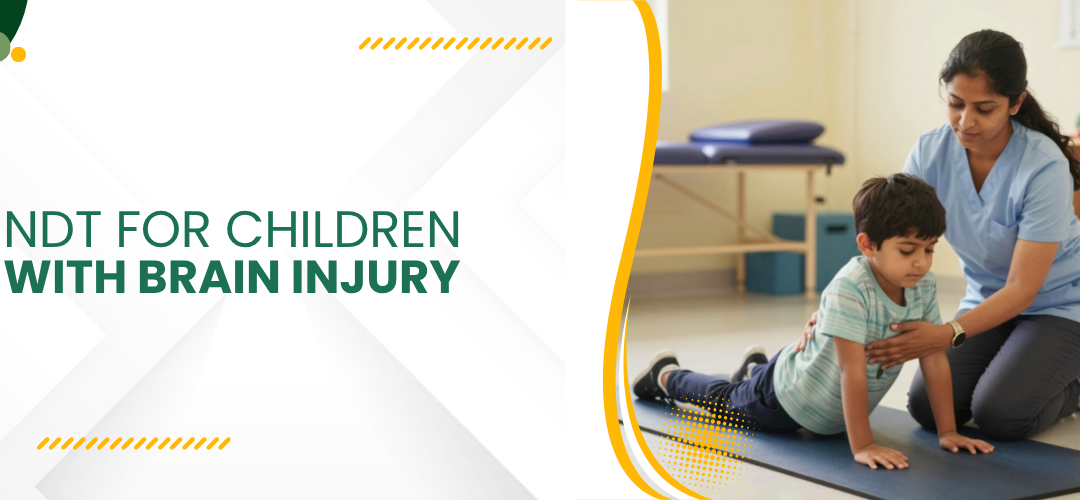
A brain injury disrupts the signals between the brain and muscles, leaving movement stiff, weak, or uncoordinated. The child intends to move, but the motor commands arrive distorted. Neurodevelopmental therapy corrects this through hands-on guidance, with the therapist directing correct movement patterns repeatedly until the brain reproduces them on its own. Progress builds in sequence, from head control to sitting, then reaching, standing, and walking.
According to Dr. Purva Pande, a leading specialist in Neurodevelopmental Therapy in Gurugram, A young brain adapts fast, but it can lock in the wrong movement patterns just as fast. NDT works because it guides the correct patterns in before the compensations become permanent.
Is your child fighting stiff limbs or struggling to hold the head up?
What does NDT actually do for an injured brain?
Brain injury breaks the motor pathways. NDT goes straight at them with hands-on work.
Pattern retraining: Same correct movement, again and again, until the brain files it as the default instead of the awkward compensation it picked up after the injury.
Tone control: Muscles after brain injury go one of two ways. Too tight or too loose. Careful positioning settles that down so the child can actually move.
Postural base: No stable trunk, no reaching, no walking. So the core comes first. Everything else gets layered on after that.
Function focus: Every single session aims at something real. Holding the head up. Rolling over. Getting a spoon to the mouth.
These wins stack. One steady posture opens the door to the next skill, and the next. Read more about Pediatric Physiotherapy.
When should NDT begin after a brain injury?
Timing matters more here than almost anywhere else in paediatric rehab. The earlier, the better. Here’s why.
Early start: The infant brain rewires fastest in the first two years. Start NDT inside that window and the motor gains tend to be the strongest you’ll see.
After diagnosis: Movement delay flagged? Abnormal tone spotted? Assessment should follow right away. Wait too long and the wrong patterns set like cement.
Alongside other therapy: NDT almost never works solo. It runs next to physio and occupational therapy so the progress actually shows up in daily life, not just the clinic.
Ongoing review: Kids change as they grow. So the plan gets revisited, not locked in once and forgotten.
Delay is the enemy here. Plain and simple. Move early and the brain gets its best shot. Read our blog on how Dynamic Flex Cast helps children with cerebral palsy walk better, where similar motor recovery principles apply.
Why Choose Dr. Purva Pande?
Dr. Purva Pande built Milestones after years of paediatric rehab work across Delhi NCR. Each therapist here brings over 20 years of individual experience with brain injury, cerebral palsy, and tricky neuromotor cases.
Kids who came in with no head control are now sitting, standing, walking with support. No shortcuts. Just skilled hands and steady repetition. Most families notice real motor change inside the first three to six months.
Frequently Asked Questions
At what age can NDT therapy start for brain injury?
As early as a few months old once movement delays show.
How long does NDT take to show results?
Many children show motor gains within three to six months.
Can NDT cure brain injury in children?
No. It improves movement and function, not the injury itself.
Is NDT safe for infants?
Yes, when done by a trained paediatric NDT therapist.
Reference links:
- Neurodevelopmental Treatment in Children With Cerebral Palsy: A Literature Review
- Effect of Neurodevelopmental Treatment on Gross Motor Function and Daily Living
Disclaimer: The information shared in this content is for educational purposes and not for promotional use.
