
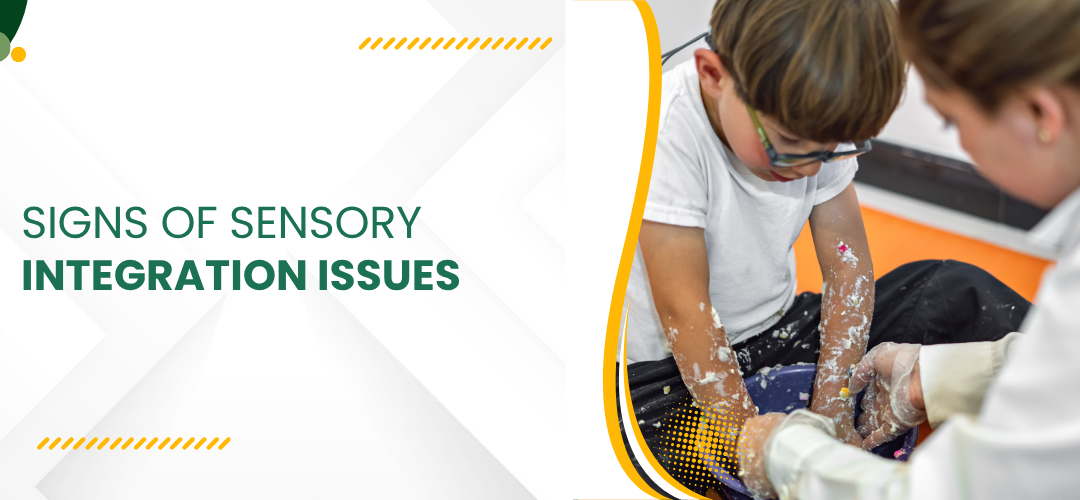
Sensory integration issues occur when the brain doesn’t process input from the body’s senses reliably, producing responses that seem disproportionate or completely absent. It’s not a behaviour problem. A child who screams when clothes touch their skin isn’t being difficult their nervous system is genuinely misreading the signal. The same goes for children on the opposite end: those who crave intense physical pressure or crash into furniture because they can’t gauge where their body is in space. Both directions are the same underlying issue.
According to Dr. Purva Pande, the founder of Milestones, a leading Child Development Center in Gurugram, “sensory processing difficulties are frequently mistaken for defiance or developmental delay, but the brain simply isn’t filtering sensory input the way it shoul and that’s something therapy can directly address.”
Your child’s meltdowns triggered by sounds, textures, or transitions?
What Are the Most Common Signs of Sensory Integration Issues in Children?
The signs vary widely depending on whether a child is oversensitive, undersensitive, or both across different sensory channels.
- Touch reactions: A child who pulls away from light touch, resists brushing teeth or cutting nails, and can’t tolerate certain clothing fabrics is showing tactile hypersensitivity not stubbornness and it usually extends into food textures too.
- Sound sensitivity: Covering ears at normal noise levels, panicking in crowded spaces, or becoming distressed by sounds other children don’t notice points to auditory processing difficulties that affect school readiness and social participation significantly.
- Movement seeking or avoidance: Some children constantly spin, crash, jump, and hang their vestibular system is under-responsive, so they keep seeking stimulation; others refuse swings, slides, and stairs because movement genuinely feels unsafe to them.
- Body awareness gaps: Bumping into walls, dropping things frequently, pressing too hard with a pencil, or hugging with surprising force often reflects poor proprioception the brain isn’t getting clear signals about where the body ends and the world begins.
These signs don’t all appear at once, and a child can be hypersensitive in one area and under-responsive in anotheroccupational therapy assessments are specifically designed to map that profile, which is part of why unaddressed cases get missed for so long.
When Do Sensory Issues Become a Problem That Needs Professional Assessment?
Some sensory sensitivity in young children is normal. But there’s a point where it’s no longer something they’ll just grow out of.
- Daily function impact: If a child’s sensory reactions are disrupting meals, sleep, dressing, or school attendance on a regular basis, it’s crossed from quirk to functional impairment and that threshold matters clinically.
- Social withdrawal: Children with unaddressed sensory difficulties often start avoiding peer interaction, not from shyness, but because playgrounds, lunchrooms, and classrooms are genuinely overwhelming environments for them.
- Emotional dysregulation: Meltdowns that seem out of proportion, difficulty transitioning between activities, or emotional crashes after school most days frequently trace back to a nervous system that’s been working too hard all day to manage sensory input.
- Age matters: Sensory issues don’t reliably resolve on their own, and children who don’t receive structured support by age five or six tend to develop compensatory behaviours that become harder to address later.
A proper sensory profile assessment identifies exactly which systems are affected, so therapy isn’t guesswork sensory integration therapy for autism explains how that targeted approach plays out in practice.
Why Choose Dr. Purva Pande?
Dr. Purva Pande, Founder and Director of Milestones Child Development Center, trained at Artemis, Medanta, and CK Birla Hospital and leads a team with over 20 years of combined pediatric experience. Sensory integration assessments at the clinic use standardised tools to build an individual sensory profile before any intervention begins so the therapy plan is specific, not generic.
Children here don’t just get quieter sensory reactions. They get better function: improved focus, more manageable mealtimes, calmer transitions, and the ability to participate in school without shutting down by afternoon.
Frequently Asked Questions
Can a child have sensory issues without an autism diagnosis?
Yes, sensory processing difficulties occur across many conditions and independently too.
Is sensory sensitivity something children outgrow on their own?
Sometimes mild cases resolve, but significant sensory issues rarely improve without structured therapy.
How is a sensory processing problem diagnosed?
A standardised sensory profile assessment by a trained occupational therapist identifies the specific areas affected.
What age can sensory integration therapy begin?
Therapy can begin from infancy; earlier assessment leads to faster and stronger outcomes.
Reference links:
Disclaimer: The information shared in this content is for educational purposes and not for promotional use.
