
Down syndrome is a genetic condition affecting physical growth, cognitive development, and speech. Children with Down syndrome often face challenges in motor skills, communication, learning, and daily activities. Structured therapy can help address these challenges and support holistic development.
At Milestones CDC, we provide early intervention programs that are evidence-based and individualized. Our goal is to empower children with Down syndrome to reach developmental milestones, improve independence, and enhance quality of life.
Doctor’s quote-
“Early, structured therapy empowers children with Down syndrome to achieve milestones confidently and independently.” – Dr. Purva Pande,14 years of experience in neurodevelopmental and sensory integration therapy, Pediatric Physiotherapist in Gurgaon
“Learn how early, structured therapy can help your child thrive. Reach out to explore personalized support today.”
How Therapy Helps Children with Down Syndrome
Therapy addresses key areas of development, ensuring children gain the necessary skills for daily life. Each therapy session is tailored to the child’s specific needs to support their overall growth.
- Muscle Tone & Movement: Addresses hypotonia and gross motor delays, helping improve posture and mobility.
- Hand & Fine Motor Skills: Enhances grasp, coordination, and dexterity for self-help activities.
- Speech & Language: Supports verbal and non-verbal communication, improving interaction and understanding.
- Feeding & Oral-Motor: Improves feeding abilities and oral-motor control for better nutrition and speech clarity.
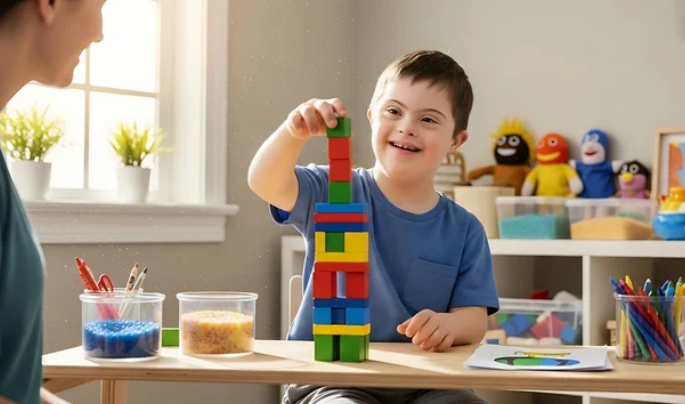
- Cognitive & Learning: Strengthens problem-solving, attention, memory, and academic readiness.
- Social & Play Skills: Encourages interaction, play, and social engagement with peers and family.
Outcomes include improved independence, communication, posture, and motor skills, reinforced by research highlighting the benefits of early intervention.
Signs Your Child May Need Therapy
Early interventions for developmental delays can make a significant difference in therapy outcomes. Parents and caregivers should watch for signs that indicate their child may benefit from specialized therapy.
- Delayed head and trunk control
- Late rolling, sitting, or walking
- Weak grasp or limited hand use
- Reduced babbling or words
- Feeding difficulties
- Poor balance and coordination
- Less interest in social interaction

Identifying these signs early allows therapists to create timely, personalized interventions, helping children reach their developmental milestones more effectively.
Noticing these signs? Connect with our specialists to discuss early intervention options for your child.”
Therapy Approach at Milestones CDC
Our therapy approach is structured and multidisciplinary, focusing on comprehensive evaluation and individualized planning. It ensures that children receive the right mix of therapies based on their developmental needs.
- Comprehensive Evaluation: Assess motor, speech, and cognitive skills to understand strengths and challenges.
- Individualized Plan: Tailored therapy plan addressing specific needs and developmental goals.
- Multidisciplinary Sessions: Includes physiotherapy, occupational therapy, and speech therapy to cover all areas of development.
- Progress Monitoring: Regular updates and adjustments ensure ongoing improvement and measurable outcomes.

This approach supports consistent growth while involving parents as partners in their child’s progress.
What to Expect During Sessions
Therapy sessions are typically 45–60 minutes and use play-based activities to engage the child while targeting developmental goals.
Hands-on facilitation of motor skills
Age-appropriate motor challenges
Speech and language exercises
Oral-motor/feeding activities
Sensory input integration
Positive reinforcement
“Sessions are adapted to each child’s developmental stage, and home exercises are provided to reinforce skills between clinic visits.” – Dr. Purva Pande, Pediatric Physiotherapist in Gurgaon
This method ensures therapy is engaging, effective, and supportive for both children and their families.
Why Choose Milestones CDC?
Our clinic provides a supportive environment with a professional team to ensure the best possible outcomes for children with Down syndrome.
Multidisciplinary Team:
Expertise across physiotherapy, OT, and speech therapy ensures comprehensive care.
Child-Friendly Environment:
Safe, engaging, and stimulating spaces for learning and therapy.
Parental Involvement:
Parents are involved in goal setting, therapy sessions, and progress tracking.
Early Intervention Focus:
Programs are designed to maximize developmental potential from an early age.
Evidence-Based Protocols:
Therapy methods are supported by research and clinical best practices.

“Take the first step toward empowering your child’s development. Schedule a consultation with our experienced team.”
Frequently Asked Questions
1. What is the best age to start Down syndrome therapy?
As early as possible, since a young brain adapts fastest. That said, therapy still helps at any age.
2. Which therapies does a child with Down syndrome need?
Children often benefit from a combination of physiotherapy, occupational therapy, speech therapy, and cognitive support.
3. How often should therapy sessions be scheduled each week?
Most children benefit from 2–3 sessions per week, with the frequency adjusted based on their individual needs and progress.
4. Can therapy be continued at home alongside clinic visits?
Yes, home exercises and activities complement clinic sessions and reinforce skill development.
5. How soon will improvements be noticeable from therapy?
Progress varies by child, but consistent therapy usually leads to observable improvements within weeks to a few months.