

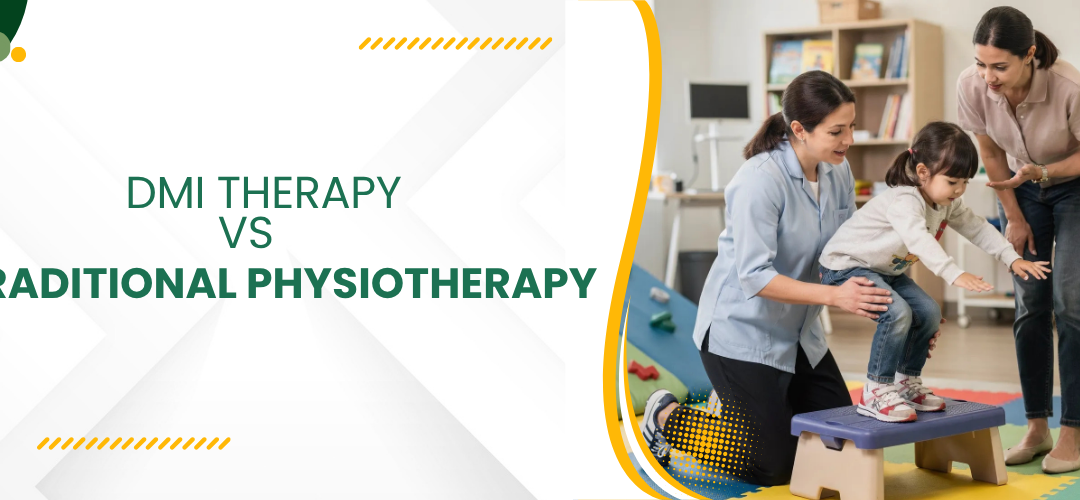
DMI therapy and traditional physiotherapy differ primarily in their approach to motor learning, with DMI focusing on high-repetition, hands-on, progressive challenges that induce neuroplasticity, while traditional physiotherapy centers on strengthening, stretching, and functional play. DMI provokes automatic motor responses by challenging the body against gravity, whereas traditional therapy assists with movements the child cannot initiate alone. The two are often sequenced together, not chosen against each other.
According to Dr. Purva Pande, DMI therapy, DMI provokes automatic postural responses through controlled instability, while traditional physiotherapy builds strength and range through guided, voluntary exercise.
Wondering which approach actually fits your child’s diagnosis?
How Does DMI Therapy Differ From Traditional Physiotherapy?
The two approaches share a goal but get there through different mechanisms, intensity levels, and clinical reasoning.
- Mechanism: DMI provokes automatic postural reactions through controlled instability, while traditional physiotherapy strengthens muscles using planned, repetitive exercises that the child performs voluntarily.
- Intensity: DMI sessions push the child through dozens of progressive movement challenges in a single block, where conventional pediatric sessions usually stay within a slower, comfort-based pace.
- Brain involvement: DMI specifically targets neuroplasticity in the developing brain by demanding rapid responses to changing positions, not just muscle work.
- Suitability: DMI suits children with cerebral palsy, hypotonia, gross motor delay, and post-stroke recovery, while standard physiotherapy fits a broader range of milder orthopedic and developmental issues.
The choice isn’t always either-or. Many children benefit when both are sequenced correctly, and that’s where assessment matters more than label. Need help choosing? Read more on our pediatric physiotherapy page.
Which Children Benefit More From DMI Than Traditional Therapy?
Some motor profiles respond faster to dynamic provocation than to standard strengthening, and the screening matters early.
- Severe gross motor delay: Kids who haven’t achieved sitting, rolling, or head control by expected age windows often plateau on conventional drills, and that’s exactly where DMI provokes new responses.
- Cerebral palsy spectrum: Children with spastic, dystonic, or mixed CP show measurable gains in postural control because DMI works alongside neurodevelopmental approaches.
- Hypotonia: Low-tone children frequently struggle in traditional sessions because they fatigue without producing real motor learning, but DMI’s brief, intense bursts work around that limitation.
- Post-genetic-syndrome cases: Kids with Down syndrome and similar conditions often need stimulus that recruits dormant motor pathways, not just strength work.
Not every child needs DMI. But the children who do need it usually don’t progress with anything else. For more on this, see our DMI guide.
Why Choose Dr. Purva Pande?
Dr. Purva Pande, Founder and Director of Milestones CDC, is a pediatric physiotherapist with over 20 years of combined team experience and is among the first practitioners in Delhi NCR to introduce DMI and Dynamic Flex Cast to children with neurological challenges. Her clinical work focuses on measurable motor outcomes, not generic therapy schedules. Learn more about Dr. Purva Pande.
Many children at the centre achieve in three months what took 12 to 18 months elsewhere, because therapy plans are rebuilt around each child’s actual motor profile. So the question isn’t whether your child can improve. It’s whether the plan is the right one.
Frequently Asked Questions
Is DMI therapy painful for children?
DMI involves controlled challenge but is not painful, and trained therapists adjust intensity to each child’s tolerance.
Can DMI replace traditional physiotherapy completely?
DMI complements rather than replaces standard physiotherapy in most pediatric cases needing rehabilitation.
At what age can a child start DMI?
DMI can begin as early as six months of age depending on diagnosis and developmental readiness.
How quickly does DMI show results?
Many children show measurable motor gains within 8 to 12 weeks of consistent DMI sessions.
Reference links:
Disclaimer: The information shared in this content is for educational purposes and not for promotional use.


